One gate, and the Door it points to
Lift Up Your Heads, O Ye Gates
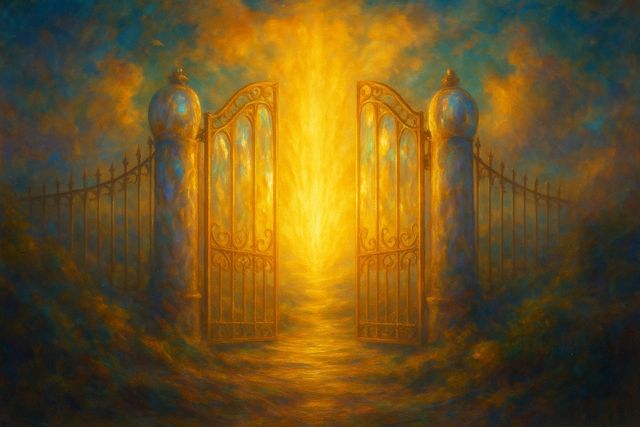
Some gates are told to open. In one of the most stirring passages in the Psalms, the ancient gates of the city are commanded to lift up their heads, to raise themselves and swing wide, because someone is coming who deserves to enter. The gates are addressed as if they were living things, drowsy or shut, and they are summoned to attention. The King of glory is arriving, and the entrance must be made ready to receive him. The call is not merely poetic drama. It is worship rising to its climax, the moment when the God of heaven comes to his dwelling and the very architecture of the city is roused to welcome him. There is a question in the passage too, asked and answered: who is this King of glory? The gates open for a specific King, named and identified, and the whole scene turns on knowing who it is that comes in. This meditation dwells on that summons and that King.
“Lift up your heads, O ye gates; and be ye lift up, ye everlasting doors; and the King of glory shall come in.”Psalm 24:7
The gate in Scripture
Psalm 24 opens with a sweeping declaration that the earth and everything in it belong to the LORD, for he founded it and established it. From that vast claim of ownership the psalm narrows to a searching question: who may ascend the hill of the LORD, and who may stand in his holy place? The answer describes one with clean hands and a pure heart, who has not given himself to falsehood, and who will receive blessing from God. The psalm sets the standard for approaching God high, and it makes worship a matter of the whole person. Then the psalm shifts dramatically. Having spoken of who may go up to God, it turns to the coming of God himself to his city. The tone becomes a summons, a great cry to the entrances of the holy place. In Psalm 24:7 the command rings out: lift up your heads, O ye gates, and be lifted up, ye everlasting doors, and the King of glory shall come in. The gates are personified, called to rise and open, because a royal figure is approaching whose greatness the ordinary entrance can scarcely contain. A question follows the command, as if a watchman on the wall demands to know the identity of the one for whom the gates are told to open. Who is this King of glory? The answer comes with martial majesty: the LORD strong and mighty, the LORD mighty in battle. The King is no mere earthly ruler returning from a campaign. He is the LORD himself, the God of hosts, the victor. The gates are to open not for a man but for the living God coming to his place. The summons and the question are then repeated, as a refrain will be repeated to drive its truth home. Once more the gates are commanded to lift up their heads, and once more the question is asked, and this time the answer names him the LORD of hosts, he is the King of glory. The psalm closes on that identification, the whole poem having moved from the earth that belongs to God, through the question of who may approach him, to the triumphant entrance of God himself into his dwelling while the everlasting doors are flung wide to receive their King.
What it comes to mean
The command to the gates reveals a God who comes. Much of religion imagines the worshiper climbing toward a distant and unmoving deity, and Psalm 24 does not deny the reality of ascent; it asks with real seriousness who may go up to the holy hill. But then it turns the movement around. The King of glory descends to enter his city. The same psalm that sets a high bar for approaching God announces that God draws near, coming to his place while the gates are told to make way. Worship is not only our going up but his coming in. That the everlasting doors are told to lift up their heads gives the scene its grandeur. Gates are made to admit those who fit through them, but these gates are commanded to raise themselves higher, as though the King approaching is too great for the entrance as it stands. The image conveys the surpassing majesty of the one who comes. He is not a visitor the city can casually accommodate. His arrival requires the very structure to rise to the occasion, to become larger than itself, to open in a way it has never opened before. The question, who is this King of glory, is the hinge of the whole passage, and its answer matters supremely. The gates do not open for anyone who demands entrance. They open for the LORD strong and mighty, the LORD of hosts. Identity is everything here. The psalm insists that we know who it is we welcome, and it will not leave the King unnamed. This is a caution against a vague and contentless worship. The doors are flung wide not for glory in the abstract but for the LORD himself, the God who owns the earth and comes to reign in his holy place. There is a rich honesty in setting the high standard of the psalm's opening beside its triumphant close. The one who may ascend God's hill has clean hands and a pure heart, a standard that should humble every honest reader, for who can claim it fully? Yet the psalm ends not with the worshiper's achievement but with the King's arrival. The weight of the passage finally rests on him who comes, the LORD mighty in battle, rather than on the fragile purity of those who would go up. It is his coming, and not our climbing, that fills the holy place with glory.
How it points to Christ, the Door
Christian worship has long heard in this psalm the entrance of Christ, and the hearing is faithful to the text. The King of glory who comes in is the LORD himself, and the New Testament confesses Jesus as Lord, the one before whom every knee will bow. When the gates are told to lift up their heads for the King of glory, the church sees the risen and ascending Christ entering into glory, the everlasting doors flung wide to receive the one who conquered in the greatest battle ever fought. And the battle is the point. The King is named the LORD mighty in battle, and Christ's victory was won not with sword and shield but on the cross and out of the tomb. He is our Passover, sacrificed for us according to 1 Corinthians 5:7, and by that sacrifice and his rising he defeated the powers that held us. The King of glory enters as the victor precisely because he first entered death for us and broke it. The gates open for a triumph purchased in blood and vindicated in resurrection. So the psalm becomes a song the church can hardly sing without lifting its own head. The one who owns the earth, the one whose holy hill we could never ascend by clean hands of our own, is the one who came down, fought the battle, and now enters his place in glory. And because he entered, the gates that were shut against us stand open. The King of glory who comes in is the very door through which we, unworthy climbers, are at last brought home.
Questions people ask
Why are the gates told to lift up their heads rather than simply open?
The image conveys surpassing majesty. Ordinary gates admit those who fit through them, but these everlasting doors are commanded to raise themselves higher, as though the approaching King is too great for the entrance as it stands. His arrival requires the very structure to rise beyond itself, picturing a glory the city can scarcely contain.
Why does the psalm insist on asking who the King of glory is?
Because identity is everything in this scene. The gates do not open for glory in the abstract but for the LORD strong and mighty, the LORD of hosts. The repeated question and answer guard against vague, contentless worship, insisting that the one welcomed is named and known: the living God himself coming to reign in his holy place.
