A well in the story of God
Rivers of Living Water
It is the last and greatest day of the Feast of Tabernacles, and Jerusalem is loud with celebration. All week the priests have carried water in a golden pitcher up from the pool of Siloam and poured it out at the altar, a ritual pleading for rain and remembering how God gave water in the wilderness. The crowds have watched this daily, the glinting pitcher, the water splashing on the stone. Then, on the climactic day, when the memory of poured water is fresh in every mind, a voice rises above the festival. Jesus stands, and He does not murmur, He cries out. Into the very moment shaped by the hope of water, He plants Himself as the answer. If anyone thirsts, He calls, let that person come to Him and drink.
“In the last day, that great day of the feast, Jesus stood and cried, saying, If any man thirst, let him come unto me, and drink.”John 7:37
“He that believeth on me, as the scripture hath said, out of his belly shall flow rivers of living water.”John 7:38
The well, in its place
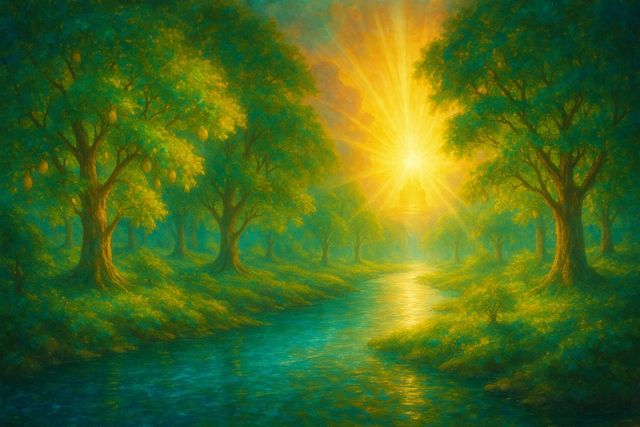
There is no literal well in this scene, and that is the point. The setting is the temple during a feast built around water, a feast that remembered the wilderness and prayed for the coming rains. The daily water-pouring ceremony had turned the whole festival into a living picture of thirst and dependence. Jesus takes that picture and locates its fulfillment in Himself and in those who believe. The source He describes is not a stone shaft or a temple ritual but the innermost being of a person. Out of the believer's heart, He says, will flow rivers of living water. The image moves from a single pitcher poured once a day to rivers, plural and inexhaustible, flowing not into a person only but out through them to a thirsty world.
What happened here
On the feast's final day Jesus stands in the temple and cries out the invitation. Anyone who thirsts should come to Him and drink, and whoever believes in Him will have rivers of living water flowing out from within. The words echo the Scriptures, gathering up the prophets' promises of water for the thirsty land. Then John, the Gospel writer, steps in to interpret. Jesus spoke this, John explains, concerning the Spirit, whom those who believed in Him were going to receive, for the Spirit had not yet been given because Jesus was not yet glorified. The promise reaches forward past the feast, past the cross and resurrection, to Pentecost and beyond, when the poured-out Spirit would make the believer a channel of the life Jesus gives.
How it points to Christ, the living water
Here the living water is unmistakably Christ and the Spirit He gives. Every earlier image gathers to this moment. The fountain of living waters, the wells of salvation, the springs in the wilderness, the spring welling up at Jacob's well, all flow toward the One standing in the temple crying out to the thirsty. And He does something the earlier images only hinted at. He promises not merely to satisfy our thirst but to make us sources for others. The Spirit He pours out turns the believer into a riverbed through which His life reaches a dry world. To come to Christ is to drink, and to keep coming is to become a channel. The gift ends our own drought and then, astonishingly, does not stop with us. It flows on.
Questions people ask
What is the feast where Jesus cried out about living water?
It was the Feast of Tabernacles, a major autumn festival remembering Israel's wilderness journey. During it, priests poured water drawn from the pool of Siloam at the temple altar each day. On the last and greatest day of that feast, with the theme of water fresh in everyone's mind, Jesus stood and offered Himself as the true living water.
Does living water mean the Holy Spirit here?
Yes. John's Gospel gives the interpretation directly. After Jesus promised rivers of living water flowing from within the believer, John explains that He spoke of the Spirit, whom believers would receive once Jesus was glorified. So the living water in this passage points specifically to the gift of the Holy Spirit poured out after the resurrection.
