One stone, and the Rock it points to
The Stones Would Cry Out
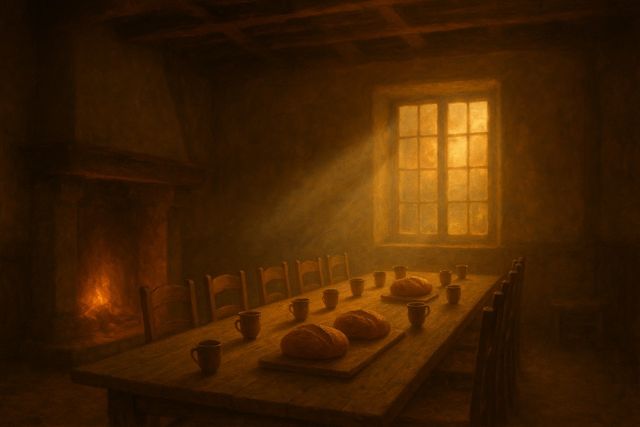
As Jesus came down from the Mount of Olives on the day we call Palm Sunday, the crowd of disciples began to praise God with a loud voice for all the mighty works they had seen. Some of the Pharisees in the crowd told him to rebuke his disciples and silence the noise. His answer has echoed ever since: if these were silent, the stones themselves would immediately cry out (Luke 19:39-40). It is a startling picture. Praise for the coming King is so fitting, so necessary, that if human voices are stopped, the mute rock of the roadside will find a voice. The theme of stones takes a sudden turn here. Elsewhere stones seal and judge and bury; here they are pictured breaking into song. Creation itself is ready to testify to the one it was made through, and there is a praise that cannot finally be silenced.
“And he answered and said unto them, I tell you that, if these should hold their peace, the stones would immediately cry out.”Luke 19:40
“For the stone shall cry out of the wall, and the beam out of the timber shall answer it.”Habakkuk 2:11
The stone in Scripture
The moment belongs to the triumphal entry, recorded in all four Gospels but with this particular exchange preserved in Luke. Jesus is descending the western slope of the Mount of Olives toward Jerusalem, riding the colt in deliberate fulfillment of Zechariah's prophecy of a king coming lowly and riding on a donkey (Zechariah 9:9). The crowd spreads cloaks on the road and cries out blessings, quoting the psalm of ascent, blessed is the King who comes in the name of the Lord (Luke 19:38; Psalm 118:26). The praise is loud, public, and pointed straight at Jesus as the promised King. The Pharisees' objection is telling. They do not say the noise is merely unruly; they ask Jesus to rebuke his disciples, as if the content of the praise, not its volume, is the problem. To bless a man as the coming King in the name of the Lord, at Passover, in the city of the great King, was politically and religiously explosive. Jesus does not soften the claim. He affirms that the praise is exactly right and warns that its suppression is impossible: were the human voices stilled, the stones would cry out (Luke 19:40). That image does not come from nowhere. Jesus draws on a stream of Scripture in which the created order testifies and even the building materials of injustice give evidence. Habakkuk had declared that the stone would cry out of the wall and the beam out of the timber, bearing witness against the violence and greed built into a house (Habakkuk 2:11). The stones there are not praising; they are accusing, the very fabric of a corrupt structure testifying to the wrong done to raise it. Jesus takes up that same startling idea of speaking stones and turns it toward praise. The wider witness of creation runs through the Psalms and the prophets as well. The heavens declare the glory of God, the hills are told to sing, the trees of the field to clap their hands, the whole earth to make a joyful noise (Psalm 19:1; 98:8; Isaiah 55:12). Against that background, Jesus' words are not hyperbole for its own sake but a claim about reality: the arrival of the King is an event so weighty that the material world is a fitting and ready witness, and if the people appointed to praise fall silent, the ground beneath them will not.
What it comes to mean
Two threads meet in the speaking stones, and it helps to hold them together. In Habakkuk the stones cry out in accusation, embedded in a wall built by extortion, testifying against their builders. In Luke the stones would cry out in praise, ready to worship the King the people were welcoming. Both share a single conviction: creation is not neutral. The physical world is a witness, and it will tell the truth, whether that truth is the guilt of injustice or the glory of the Messiah. This reframes what praise is. We sometimes treat worship as an optional human activity, a mood we may or may not be in. Jesus treats it as something closer to a law of the universe when the King is present. Praise for him is so fitting that its absence would create a kind of vacuum that the rest of creation would rush to fill. The disciples were not generating something artificial; they were doing what the whole created order was made to do, and the stones stood ready to take up the song if the singers failed. There is a sober edge here too. Within days these same crowds would fall largely silent, and other voices would cry out for crucifixion. Human praise proved fickle, as it often does. The saying about the stones is partly a warning: the testimony to Christ does not depend on the constancy of any crowd. If the church grows cold, if witnesses are silenced by fear or by force, the truth about Jesus will not thereby be extinguished. God is not short of witnesses, and the least likely ones will speak before his glory goes unannounced. We should read the promise plainly and not turn it into mere poetry. Jesus is not simply saying the scene was moving. He is asserting that reality itself is oriented toward the worship of God, so that silencing genuine praise is finally as futile as commanding the ground to stay quiet. For the persecuted believer this is enormous comfort: your voice can be jailed, your gatherings scattered, your name struck from every register, and still the praise of Christ will find a way to sound. And for the complacent it is a summons: do not leave to the stones a song that is your glad privilege to sing.
How it points to Christ, the Rock and the cornerstone
The stones stood ready to cry out because of who was riding into Jerusalem. All things were made through him and for him, and in him all things hold together (Colossians 1:16-17; John 1:3). The rocks of that roadside were, in the deepest sense, his own handiwork, and it is no strange thing that the work of his hands should recognize its Maker. When the King comes to his creation, the creation leans toward praise. This is the same Christ who is himself the Rock and the rejected stone. There is a quiet wonder in it: the living Stone rides past the dead stones, and they are ready to sing his worth even as the builders prepare to reject him. He receives the praise of the crowd without deflecting it to heaven, as angels and apostles refuse to do, because the praise belongs to him by right. Only God may rightly accept what Jesus accepts here. And he still gathers praise that cannot be silenced. Where his people are free, he calls them to sing gladly and not surrender their song to the rocks. Where his people are oppressed and their worship driven underground, he assures them that the testimony to his glory outlasts every attempt to mute it. The one who entered Jerusalem to die and rise now reigns, and the whole creation still groans toward the day when every voice, human and otherwise, will confess that Jesus Christ is Lord.
Questions people ask
Was Jesus speaking literally about the stones crying out?
He was making a real claim, not mere poetry. Drawing on Scripture where creation testifies (Habakkuk 2:11; Psalm 98:8; Isaiah 55:12), he asserted that praise for the King is so fitting that if people fall silent, creation itself would supply the witness. Reality is oriented toward the worship of God, and that praise cannot finally be suppressed.
How does Habakkuk 2:11 connect to Luke 19:40?
Both picture stones that speak, but for different ends. In Habakkuk the stone cries out of the wall in accusation, testifying against injustice built into a house. In Luke the stones would cry out in praise of the coming King. The shared conviction is that creation is not neutral; it will tell the truth, whether of guilt or of glory.
