The Seven Churches · 7 of 7
Laodicea: The Lukewarm Church
Laodicea was one of the wealthiest cities in the region, a banking center so rich that after a devastating earthquake it rebuilt itself without imperial help, refusing aid. It was famous for a thriving textile industry producing soft black wool, and for a medical school that made a well-known eye ointment. But it had no good water of its own; water came by aqueduct from distant sources and arrived lukewarm, neither hot nor cold. Its self-sufficiency, its wealth, and its tepid water all shape Christ's words.
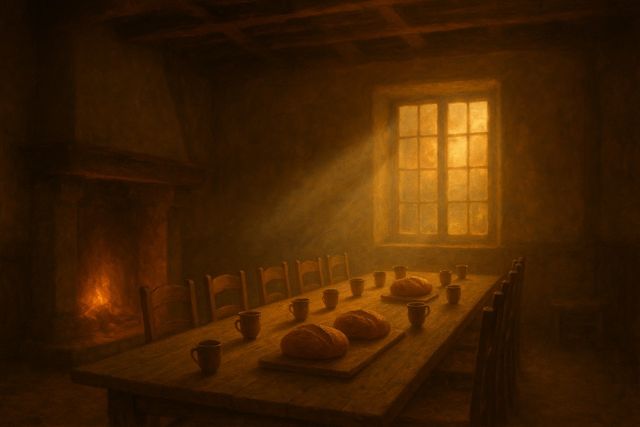
“Behold, I stand at the door, and knock: if any man hear my voice, and open the door, I will come in to him, and will sup with him, and he with me.”Revelation 3:20
How Christ presents himself
To this self-satisfied church Christ presents Himself as the Amen, the faithful and true witness, the beginning of the creation of God. He is the Amen, the final and certain truth, and the faithful and true witness, in sharp contrast to a church deceived about itself. As the beginning, the origin and ruler, of God's creation, He is the source of all things, over against a city that trusted its own resources and boasted it needed nothing. His witness is reliable where their self-assessment is a lie. He tells them the truth about themselves precisely because He is the true and faithful One who cannot flatter.
What he commends
To Laodicea Christ offers no commendation at all. Alone among the seven churches, this one receives not a single word of praise. He finds nothing in its works to honor, for its comfortable religion has produced nothing He can approve. This silence is itself a solemn verdict; the church that thought it lacked nothing lacked everything that mattered. Yet even here His purpose is not to abandon but to restore, for He immediately adds that as many as He loves, He rebukes and chastens. The absence of praise is not the absence of love, but a love that refuses to leave them deceived.
What he rebukes
His rebuke is the sharpest of the seven. They are lukewarm, neither cold nor hot, and He says He will spew them out of His mouth, as their own tepid aqueduct water was fit only to be spat out. They boast that they are rich, increased with goods, and in need of nothing, not knowing that they are wretched, miserable, poor, blind, and naked. Their banking wealth, their fine wool, and their famous eye ointment cannot cover their true poverty, nakedness, and blindness before God. Self-sufficient and complacent, they are the very opposite of what they believe themselves to be.
His call and his promise
He counsels them to buy from Him gold refined in fire, so they may be truly rich, white garments to cover their shame, and eyesalve to anoint their eyes so they may see, offering the very things their city prided itself on, but real and from Him. He rebukes and chastens because He loves them, and calls them to be zealous and repent. Then comes His famous appeal: He stands at the door and knocks, and if anyone hears His voice and opens, He will come in and dine with them. To the one who overcomes He promises to sit with Him on His throne, as He overcame and sat with His Father.
The Lord who walks among the lampstands
This letter reveals Christ as the faithful and true witness who loves His people too much to let them believe a comforting lie. He is the Amen, the truth that exposes every illusion of self-sufficiency, and He stands outside the door of His own church, knocking, seeking to come in. He offers Himself as true gold, true clothing, and true sight for those who own their poverty. His rebuke is the discipline of love, and His promise is astonishing: a seat with Him on His throne. To come to Christ here is to abandon the pretense that you need nothing, to open the door to Him, and to receive from His hand the wealth that lasts.
Questions people ask
What does it mean that the church at Laodicea was lukewarm?
Lukewarm describes a church that was neither cold nor hot, complacent and spiritually indifferent. The image likely drew on Laodicea's water supply, which arrived tepid by aqueduct, useful for neither healing heat nor refreshing cold. Christ found this middle-of-the-road religion so distasteful that He warned He would spew them out, and He called them to zealous repentance.
What does it mean that Christ stands at the door and knocks?
In this letter the risen Christ stands outside the door of a complacent church, seeking to be let back in. It pictures His patient, loving appeal to any who will hear His voice and open to Him, promising intimate fellowship, to come in and dine with them. Often applied to individuals, it first addressed a church that had shut Him out.
