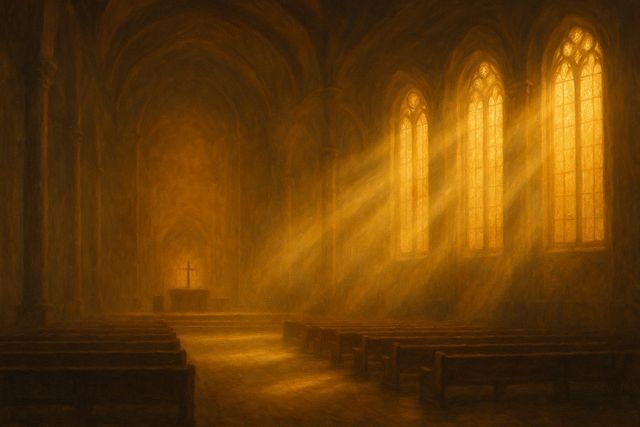
A name of God
Jehovah Shammah, the LORD Is There
Jehovah Shammah means the LORD is there. It is the final phrase of Ezekiel's vision, the new name given to the future city of God. Spoken to a people in exile who had watched God's presence depart, it is a promise that the great absence will be undone, and God will dwell with His people forever.
“It was round about eighteen thousand measures: and the name of the city from that day shall be, The LORD is there.”Ezekiel 48:35
What the name means
Jehovah Shammah joins the covenant name of God with the Hebrew word shammah, meaning there, in that place. So the name of the restored city becomes the LORD is there. For a people whose deepest loss was the departure of God's glory from the temple, no promise could mean more. The name gathers up the great hope of all Scripture, that God's aim has always been to dwell among His people, to make His home with them. It is not chiefly about geography or architecture but about presence, the assurance that the very being of the city, and of the people, will be defined by God's nearness. Jehovah Shammah reveals a God whose settled purpose is to be with us, permanently and unbroken.
Where it appears
The name closes the book of Ezekiel, sealing a long vision of a restored temple, city, and land. Ezekiel had earlier seen the terrible sight of God's glory withdrawing from the defiled temple before Jerusalem fell, a departure that captured Israel's exile and shame. Now, at the vision's end, the prophet is given the name of the future city, and it is Jehovah Shammah, the LORD is there. The whole arc moves from the glory departing to the glory returning, from absence to abiding presence. The name stands as the last word of the book, a horizon of hope held out to a scattered and grieving people.
How you see it in Christ
The promise that God will dwell among His people takes flesh in Jesus. John writes that the Word became flesh and tabernacled among us, and we beheld His glory. His very sign name, Immanuel, means God with us. Where Ezekiel's temple was a vision, Christ is the reality, God present in person, and He calls His people His body and temple, filled with His Spirit. Before He left, He promised, lo, I am with you always, and the Bible's final vision shows the new Jerusalem where God dwells with His people, and there is no temple, for the Lord is its temple. Jehovah Shammah, the LORD is there, finds its everlasting yes in Jesus, who is God come to stay.
Questions people ask
What does Jehovah Shammah mean?
Jehovah Shammah joins God's covenant name with the Hebrew word shammah, meaning there. It is the name given to the future city in Ezekiel's vision, the LORD is there. For exiles who had seen God's glory depart from the temple, it promised that His presence would return and remain, revealing that God's great purpose is to dwell with His people forever.
How does Jehovah Shammah point to Jesus?
The name promises God's abiding presence, and Jesus is that presence in person. John says the Word became flesh and dwelt among us, and Christ is named Immanuel, God with us. He promised to be with His people always and fills them with His Spirit. Scripture's last vision shows God dwelling with us forever, the final fulfillment of the LORD is there.
