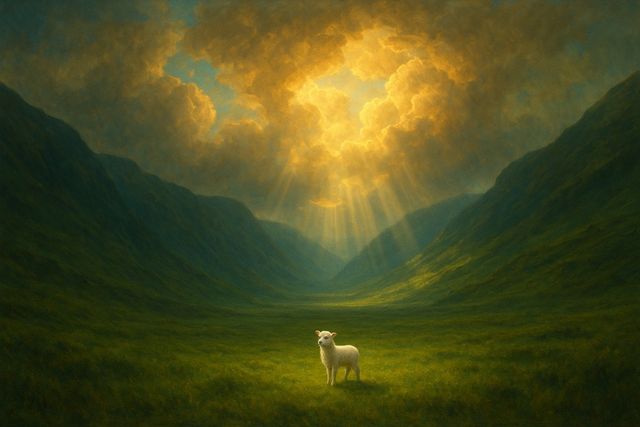
A name of God
Jehovah Raah, the LORD My Shepherd
Jehovah Raah means the LORD my shepherd. David, once a shepherd himself, gave us the best loved words in the Psalms when he said the LORD is his shepherd and he shall not want. The name reveals a God who tends His people with the patient, personal care a shepherd gives to sheep who could not survive alone.
“The LORD is my shepherd; I shall not want.”Psalm 23:1
What the name means
Jehovah Raah draws on the Hebrew verb raah, meaning to shepherd, to feed, to tend and lead a flock. In the Psalm David uses a form of this word to say the LORD is my shepherd, my ro'i. A shepherd in that world lived with his sheep, guiding them to pasture and water, guarding them from predators, seeking the strays, and carrying the weak. To call God our shepherd is to admit that we are sheep, prone to wander and unable to defend ourselves, and to trust that He takes full responsibility for us. Jehovah Raah reveals a God whose care is not distant management but daily, tender provision, who knows each of His own and leads them through danger toward rest.
Where it appears
The most famous use is the opening of the twenty third Psalm, where David sings that the LORD is his shepherd, leading him beside still waters and through the valley of the shadow of death. The image runs throughout Scripture. God is called the Shepherd of Israel who leads Joseph like a flock, and Isaiah pictures Him gathering the lambs in His arms. The prophet Ezekiel rebukes the false shepherds of Israel and promises that God Himself will search for His scattered sheep and feed them. Across these passages the shepherd image gathers up God's guidance, provision, protection, and refusal to abandon even one wandering member of His flock.
How you see it in Christ
Jesus took this name and made it His own. He said plainly, I am the good shepherd, and added that the good shepherd gives his life for the sheep. He is the One who leaves the ninety and nine to seek the single lost sheep and carries it home rejoicing. He knows His sheep by name, and they know His voice. Unlike the hireling who flees, He stood between the wolf and the flock and laid down His life at the cross, then took it up again. The New Testament calls Him the great Shepherd and the chief Shepherd who will appear in glory. In Jesus, Jehovah Raah has come in person to gather, guard, and give His life for you.
Questions people ask
What is the difference between Jehovah Raah and Jehovah Rapha?
The names sound similar but come from different Hebrew words. Raah means to shepherd, tend, or feed, so Jehovah Raah is the LORD my shepherd. Rapha means to heal or make whole, so Jehovah Rapha is the LORD who heals. One reveals God's guiding, protecting care over His flock; the other reveals His power to mend what is broken.
Why does the Bible call people sheep?
The image is humbling and hopeful. Sheep are prone to wander, easily frightened, and unable to defend themselves, so they depend entirely on a shepherd. Calling us sheep admits our tendency to stray and our need for guidance and protection. It also assures us that God takes full responsibility for us, leading, feeding, and rescuing us as a good shepherd does his flock.
