A Christian tradition, and the Christ at its center
The Reformed Tradition
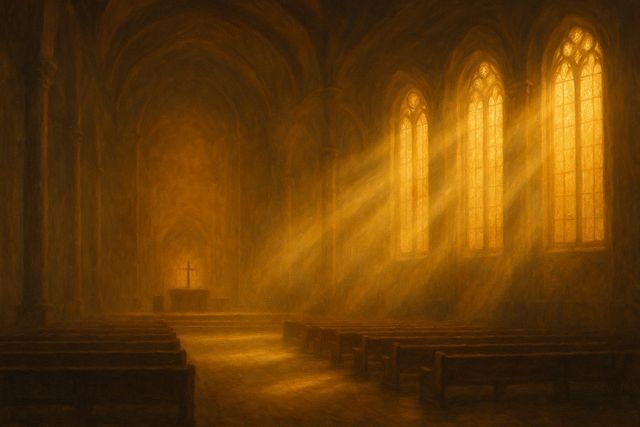
Walk into a Reformed church and you meet a faith centered on the greatness of God and the sufficiency of his grace. Worship tends to be thoughtful and word-centered: robust congregational singing, earnest prayer, and preaching that works carefully through Scripture. You will hear much about God's sovereignty over all things, the depth of human need, and the unearned mercy that meets it in Christ. The mood can feel weighty and reverent, yet it aims at joy, a settled confidence that salvation rests on God rather than on the strength of our own effort. This stream includes Presbyterian, Continental Reformed, and Reformed Baptist congregations, among others. Whether in a plain meetinghouse or a historic sanctuary, the heartbeat is the same: God is glorious, grace is free, and Scripture is the trustworthy guide for faith and life.
“For by grace are ye saved through faith; and that not of yourselves: it is the gift of God:”Ephesians 2:8
“For whom he did foreknow, he also did predestinate to be conformed to the image of his Son, that he might be the firstborn among many brethren.”Romans 8:29
What it is
The Reformed tradition grew out of the sixteenth-century Reformation, shaped especially by John Calvin and other reformers in Switzerland, France, the Netherlands, Scotland, and beyond. It is often summarized by the solas: salvation by grace alone, through faith alone, in Christ alone, on the authority of Scripture alone, for the glory of God alone. Reformed churches emphasize God's sovereignty over creation and salvation, the seriousness of sin, and God's initiative in redeeming a people. Many read Scripture through covenant theology, seeing one unfolding plan of grace across the Testaments. The tradition is confessional, guided by historic documents such as the Westminster Standards, the Heidelberg Catechism, and the Belgic Confession. It is expressed today through Presbyterian, Continental Reformed, and Reformed Baptist bodies worldwide, differing among themselves on baptism and church government while sharing a common theological core.
How they worship and what they hold
Reformed worship is ordinarily simple, orderly, and centered on the preached word, understood as the chief means by which God speaks to his people. Services include prayer, Scripture reading, congregational singing, confession of sin, and a sermon that seeks to explain and apply the text. Two sacraments are held: baptism and the Lord's Supper. Most Reformed churches baptize the infant children of believers as a sign of God's covenant promise, while Reformed Baptists baptize only those who profess faith. In the Supper, Christ is received by faith as spiritually present, nourishing believers, rather than through a change in the elements. Governance is typically shared among elders. Historic creeds and catechisms often guide teaching. The tone is reverent and God-focused, resisting spectacle so that attention rests on the Lord being worshiped.
The Christ at the center
Christ stands at the center as the only Savior and Mediator. The Reformed tradition confesses Jesus as fully God and fully man, the eternal Son who lived the obedience we owed, died bearing the penalty for sin, and rose in victory. Salvation is understood as God's gift: sinners are saved by grace through faith, not as a reward for good works, so that no one may boast and all glory returns to God. Many in this tradition emphasize that God foreknew and set his love on his people in advance, drawing them to himself. However these deep matters are held, the accent falls on grace that comes to us undeserved and holds us securely. Beneath the distinctives is the common Christian confession: Jesus is Lord, crucified and risen, and in him alone we are reconciled to God.
Questions people ask
Are they Christian?
Yes. The Reformed tradition is a historic Protestant stream that confesses Jesus as fully God and fully man, crucified and risen, the only Savior. It holds firmly to Scripture and to salvation by grace through faith. Its distinctive emphasis on God's sovereignty in salvation is a way of magnifying grace, not a departure from the core Christian faith shared across the church.
Can I visit?
Yes. Visitors are warmly welcome. Expect a fairly simple, word-centered service with singing, prayer, and a substantial sermon. You can simply sit and listen; no participation is required. The Lord's Supper is usually offered to professing believers, so practices vary on who partakes. Most congregations are glad to answer questions afterward and help newcomers understand what they saw.
