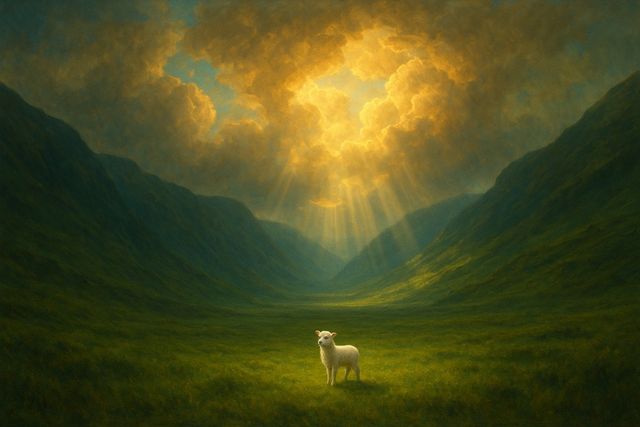
One wind, and the Spirit it points to
The Wind That Dried the Flood
After the long ordeal of the flood, when the waters had covered the earth and every living thing outside the ark had perished, the story turns on a single sentence. God remembered Noah, and all that was with him in the ark, and God sent a wind to pass over the earth, and the waters began to subside. It is a turning point held in a few words: God remembered, and the wind came. The wind here is ruach, the same word that means wind, breath, and Spirit at once, the very word that opens Genesis over the waters of creation. The reader is meant to feel the echo. At the beginning the Spirit of God moved over the deep and order was born. Now, after the deep has returned in judgment, a wind of God passes over the flooded earth and a new order begins. The waters go down. The dove is sent. The world is given back.
“And God remembered Noah, and every living thing, and all the cattle that was with him in the ark: and God made a wind to pass over the earth, and the waters asswaged;”Genesis 8:1
The wind in Scripture
The verse begins not with weather but with remembrance. God remembered Noah. In the Bible this remembering is never a matter of God recalling something forgotten, as though the flood had slipped his mind. To remember, in Scripture, is to act on a commitment, to move toward someone in faithfulness. When God remembers Noah, it means the tide of judgment has reached its turn and mercy now moves. The wind that follows is the visible sign of that remembering. Then God makes a wind to pass over the earth. The image deliberately recalls the opening of Genesis, where the Spirit of God moved over the face of the waters. The same word, ruach, stands at both scenes. At creation the deep was tamed into a world; here the deep of the flood is driven back so that the world may return. The flood was, in a sense, a great undoing, a return of the earth to the watery chaos before order. The wind is the sign that God is making order once more. What follows unfolds slowly and patiently. The waters do not vanish in an instant. They recede over many days. The fountains of the deep and the windows of heaven are closed, and the flood withdraws gradually until the ark comes to rest on the mountains. Even then Noah waits. He sends out a raven, then a dove, and the dove returns because there is no place to rest. He waits again and sends the dove a second time, and it comes back with a fresh olive leaf, the first green sign that life has surfaced. He waits again and sends it a third time, and it does not return, for the earth is dry. The pace matters. New beginnings in Genesis are not instant. The wind starts the receding, but the dry ground comes in God's own unhurried time, and Noah's part is to wait and to watch for the signs. The dove and the olive leaf become, for all generations after, the emblems of a judgment passed and a peace restored. Over the drying waters a bird carries the token that the world is habitable again, and that God has kept his word to the one he remembered.
What it comes to mean
The first thing this verse teaches is that judgment in Scripture is never God's final word to those he holds in covenant. The flood is real and terrible, and the text does not soften it. Yet the account does not end in water. It turns on the sentence that God remembered Noah, and the whole movement afterward is toward restoration. The same God whose justice sent the flood sends the wind that ends it. Mercy is not an afterthought to judgment; it is where the story was always going for the one kept safe in the ark. The ark itself is the proof of it, prepared long before the rain, a vessel of rescue built into the very shape of the judgment. God's justice and God's mercy are not at war in this account. They move together, and mercy has the last word. The word ruach binds this scene to the beginning of all things. At creation the ruach of God moved over the waters and brought forth a world. Here the ruach of God passes over the waters and brings back a world. The reader is meant to see the flood as a kind of return to the formless deep, and the receding as a kind of new creation. The wind is not merely meteorology. It is the sign of the same divine presence that hovered at the first, now hovering again to make a beginning after the end. There is honest instruction in the pace of it. We might expect the God who can flood the earth to dry it in a moment, but he does not. The waters recede slowly, and Noah waits, and the dove goes out and comes back and goes out again. New beginnings in the life of faith often come like this. The wind of God turns the tide, but the dry ground appears in its own time, and the waiting is part of the work. To watch for the olive leaf is itself an act of trust. We should not over-read the wind as a full picture of the Holy Spirit; the ancient text speaks plainly of a wind God sent. Yet the deliberate echo of the creation account is there in the shared word and the shared image of a bird over the waters, and Scripture as a whole invites us to see the same faithful presence at work. The God who began the world and the God who began it again after the flood is the God who, in Christ, is making all things new. The wind over the flood is a rehearsal of that hope.
How it points to Christ and the Spirit
The flood and its receding wind point forward to the greater work of God in Christ, and the New Testament makes the link directly. The waters of the flood, through which Noah and his family passed to safety, are named as a picture of baptism, the passage through water into new life. What Noah underwent in the ark, the believer undergoes in Christ: a passing through judgment into a world made new on the other side. The dove returns here too. Over the receding flood a dove carries the sign that the judgment is spent and peace has come. At the baptism of Jesus the Spirit descends like a dove and rests upon him, the sign that in him the judgment is met and reconciliation has come. The bird over the waters of the flood and the Spirit over the waters of the Jordan belong to one story. In Jesus the wind of new beginning is not merely sent over the earth; the Spirit himself comes to rest and remain. And the promise reaches into every life that feels flooded. There are seasons that feel like an undoing, when the waters seem to cover everything and no dry ground is in sight. The gospel does not promise the flood will be quick to recede. It promises that God remembers his own, that the wind of his Spirit is already moving over the deep, and that in Christ the ground will be given back. The one who calmed the sea and rose from the grave is the pledge that judgment is not the end for those he holds.
Questions people ask
What does it mean that God remembered Noah?
In Scripture, God remembering is not recalling something forgotten but acting on his faithfulness. When God remembered Noah, the flood reached its turning point and mercy moved. The wind that follows is the sign of that remembering. God had not overlooked Noah; the phrase marks the moment restoration begins.
Is the wind over the flood the Holy Spirit?
The text speaks plainly of a wind God sent, and we should not over-read it. Yet the same word ruach and the same image of a bird over the waters deliberately echo the creation account. Scripture as a whole invites us to see the one faithful presence of God at work in both.
