A verse, in context
Psalm 23:4, The Valley of the Shadow
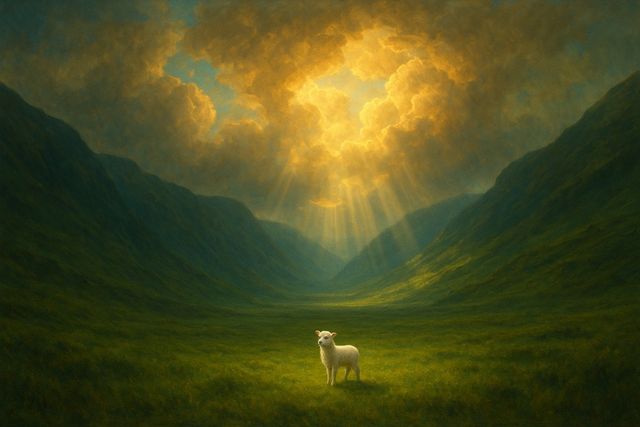
"Yea, though I walk through the valley of the shadow of death, I will fear no evil: for thou art with me" (Psalm 23:4) is heard mostly at gravesides. It is a fitting comfort in death, but the whole psalm is about being led through all of life by a Shepherd who is always present.
“Yea, though I walk through the valley of the shadow of death, I will fear no evil: for thou art with me; thy rod and thy staff they comfort me.”Psalm 23:4
How it is often used
How it is often used. Psalm 23, and especially verse 4, is so associated with funerals that many people assume it is chiefly a death-and-mourning text, read to comfort the bereaved and little else. The comfort it offers the grieving is genuine and precious, and it belongs at the graveside. But treating the psalm as only a funeral reading narrows a song that is really about the whole of a life lived under God's care. "The valley of the shadow of death" is one stretch of a longer journey that also passes through green pastures, still waters, and a spread table. And the phrase itself, while it certainly includes physical death, pictures the deepest darkness and danger of any kind. By reserving the psalm for funerals, we miss that its central promise, "thou art with me," is meant to steady us through every dark valley in living, not only at the end.
The passage around it
The passage around it. Psalm 23 is a psalm of David, and its governing image is the LORD as shepherd caring for His sheep through the whole course of life. It opens, "The LORD is my shepherd; I shall not want" (v1). He leads to green pastures and still waters and restores the soul (vv2-3), guiding "in the paths of righteousness for his name's sake." Verse 4 is the low point of the journey: "Yea, though I walk through the valley of the shadow of death, I will fear no evil: for thou art with me; thy rod and thy staff they comfort me." But the psalm does not end there. It moves to a table prepared "in the presence of mine enemies," an anointed head, and an overflowing cup (v5), and closes, "Surely goodness and mercy shall follow me all the days of my life: and I will dwell in the house of the LORD for ever" (v6). The valley is thus one part of a shepherded life that runs through pasture, valley, and table, all the days of one's life, and finally into God's house forever.
What it actually means, and where it leads
What it actually means, and where it leads. Verse 4 is not merely about dying; it is about facing the darkest, most frightening stretches of life without fear, because the Shepherd is present. "For thou art with me" is the heart of it: the reason fear loses its grip is God's companionship, and His rod and staff, the shepherd's tools of protection and guidance, bring comfort. Set within the whole psalm, this promise covers every valley we walk, from grief and danger to death itself, and it is bracketed by pasture, table, and the house of the LORD forever. It leads directly to Christ, who said, "I am the good shepherd: the good shepherd giveth his life for the sheep" (John 10:11). He is the Shepherd who walks with us through every dark valley, who Himself passed through death, and who leads His sheep home to dwell in God's house forever. So the psalm belongs at funerals, but it belongs even more in daily life, as the song of those the Good Shepherd is leading all their days.
Questions people ask
Is Psalm 23 only for funerals?
It is a fitting comfort in death, but the whole psalm is about being led through all of life by the Shepherd, from green pastures to a spread table to God's house forever. Verse 4's promise, "thou art with me," steadies us through every dark valley, not only at the end.
What is "the valley of the shadow of death"?
The phrase pictures the deepest darkness and danger, which certainly includes physical death but is not limited to it. It stands for any of life's most frightening, threatening stretches, through which the Shepherd walks with His sheep.
How does Psalm 23 point to Jesus?
Jesus called Himself "the good shepherd" who "giveth his life for the sheep" (John 10:11). He is the Shepherd of Psalm 23 who walks with His people through every valley, who passed through death Himself, and who leads them home to dwell in God's house forever.
